Monday, August 22, 2011

Flounder Meuniere with Oregano


I had this craving for sole meuniere yesterday.  I kept thinking about it during spin class, and later in boot camp.  For the unitiated, sole meuniere is a fancy name for pan-fried sole in a butter and lemon sauce.  But when I got to the store I was a bit shocked to see that DoverSole was $29 a pound.  Flounder was next to the sole and it cost about $12 a pound.  I figured they were both delicate white fish.  I went with the flounder. 

I dried off the flounder with paper towels and dredged the filet through flour with salt and pepper.


When I was returning the flour to the shelf I noticed some oregano.  I sprinkled some on both sides of the filet and press down firmly - I didn't want the oregano to come off during the cooking process.


I used my Le Creuset non-stick frying pan.  I was afraid the filet would stick to my cast iron skillet, my usual go-to pan.  Instead of using 6 tablespoons of butter as you would in a classic sole meuniere, I used mostly olive oil and a tablespoon of butter.  I squeezed lemon juice over the mixture and tossed the lemon in the pan while it cooked to infuse the dish with a strong lemon flavor.  By adding the oregano this really wasn't a classier meuniere anyway - so what the heck?  Extra virgin olive oil is much better for you (and lower in fat) than all that butter.  And you still get the butter flavoring.  I cooked the filet for two minutes on each side.  I pre-heated the pan for a good 10 minutes over medium heat.  Flounder doesn't have the strong smell of salmon, so my kitchen wasn't left smelling fishy.


I roasted asparagus, tomato and lemon for 20 minutes in a 400 degree oven, flipping the asparagus at 20 minutes.  Don't flip the tomatoes.


The flour created a crust, sealing in the juices inside the fish and providing a bit of a crunch.  I drizzled more fresh squeezed lemon juice and the pan drippings over the entire dish before serving.  It was delicious.  The filet of flounder cost about $5; the asparagus and tomato about $4 - so I had an elegant dinner for $9 - less than I would have paid for delivery from Chirping Chicken - and much healthier.

Ingredients

1/2 pound flounder filet per person
1/2 cup all purpose flour
3 tablespoons extra virgin olive oil
2 tablespoons dried oregano
1 lemon
2 pats butter
salt & pepper to taste

Method

Pre-heat non-stick, flat surfaced pan over medium heat for 10 minutes
Meanwhile, put the flour, salt and pepper on a plate and dredge filet(s) through the mixture
Next, add the dried oregano by pressing firmly onto the floured filets. Cover both sides thoroughly, adding more as necessary if preparing more than one
Add the olive oil and butter to the heated pan, swirling the mixture around and allowing to heat for a minute or two
Add the flounder filet, squeeze some lemon juice into the pan and add the two halves of the lemon.  Cook the filet for exactly 2 minutes on each side
Remove and serve immediately.  Pour the left over juices in the pan over the fish


Friday, August 19, 2011

Watermelon Radish


My friend Bobby gave me a watermelon radish.  He has a house upstate with a garden where he grows vegetables including this stunning radish.  It looked like a turnip but when I sliced it open I was really surprised at the beautiful color.


I didn't know what to do with it so I put it in the fridge until I came up with an idea.  Nothing came to mind so I finally just sliced it open and ate it raw with a little sea salt and a squeeze of lemon.  It had quite a kick - I was surprised at how spicey and peppery it was.  But it sure was good!


These types of radishes thrive in cold weather.  I don't know if that accounts for the vivid coloring inside.  The only down side is that they're hard to find.  But the Union Square Farmers Market has them - so keep your search to your local farmers markets.  The big guys like Whole Foods and Citarella don't carry them to my knowledge.

Thursday, August 18, 2011

Fool Proof Scallops

Scallops with sauteed spinach and garlic and roasted tomato

For the longest time I couldn't cook scallops the way I like them.  I tried to sautee them, bake them, broil them and they always came out rubbery.  But recently I figured it out - and it's really easy to cook them.

First, I dry them off with paper towels and then I dredge them in flour


I use my trusty cast iron skillet.  As always, I make sure the pan is really hot - so I pre-heat the pan over medium heat for about 10 minutes.  When the pan is hot enough I put in extra virgin olive oil and a pad of butter.  That small amount of butter really doesn't raise the calorie and fat count that much - but you still get that wonderful taste of it, almost as if you cooked the scallops in butter alone.


Cook the scallops for exactly two minutes on each side

Et viola!  Perfect every time - served above with string beans and garlic

Ingredients

6 bay scallops per person
1/2 cup flour
1/8 cup of extra virgin olive oil
1 pad of butter (leave the butter on the counter for a few hours before cooking)
salt and pepper to taste

Method

Pre-heat cast iron skillet for a good 10 minutes over medium heat prior to cooking.
Once the pan is hot enough carefully pour in olive oil and drop in the butter.
Move the pan around to distribute the oil and butter.
Dry scallops with paper towel thoroughly.
Put the flour in a plate large enough to accommodate the scallops - you want to leave them in the flour for a few minutes.
Dredge scallops through the flour so they're well coated.
Sautee for exactly 2 minutes on each side.
Serve immediately and enjoy.

Wednesday, August 17, 2011

Poor Man's Lobster

It's a shame that the words "steamed fish" conjure such yucky images.  But the fact is, steaming is a great way to prepare fish.  It's fast, easy and your kitchen isn't left smelling of fish.  Last night I experimented with a new monkfish recipe.

First I lined a casserole dish with lemon pesto, cilantro, sliced lemons and tomatoes. (If you don't like cilantro you can skip it.)   

You can see why they call monkfish the "poor man's lobster."  This piece looks a bit like a lobster tail on steroids!  This half pound portion cost $7 at Citarella. A lot cheaper than lobster and thus the moniker.

I covered the monkfish with a sprinkle of cayenne pepper and chopped fresh garlic and chopped fresh ginger root.

I had a jar of fig jam in the fridge (from a gift basket).  I smeared a spoonful of that on along with dollops of sundried tomato tapenade and eggplant tapenade that also came from a jar.  Then I added teryaki sauce.  I was worried this was going to be too much.  But the results were fantastic.

I have a steamer with two levels - I cooked broccolini on the lower level while the mean course steamed away on the upper level.

I tossed in the remainder of the tomato and lemons.  The tomatoes turned out stewed.  They were delicious.  I steamed for about 10 minutes.  You can tell it's done when pleasant odors come wafting from the kitchen - not a fishy smell - it just smelled wonderful.

My steamer's close-up moment

It's so cool to have your entire dinner cook in one pot.  Clean-up takes about a minute!

Only serve the monkfish, tomatoes, lemon and broccolini - discard the lemon basil and cilantro leaves.

Et Viola!  Invest in a good steamer - mine cost $40 - you'll be glad you did.  Go for a metal one, not the bamboo - you'll get more use out of it.

Ingredients

1/2 pound piece of monkfish per person
1/4 cup lemon basil leaves
1/4 cup cilantro leaves (optional)
2 cloves fresh garlic finely chopped
2 teaspoons fresh ginger finely chopped
1 teaspoon fig jam (optional - but try to hunt down a jar, it's worth it)
1/2 teaspoon cayenne pepper
two lemons sliced into rounds
one tomato sliced
one bunch broccolini
1/8 cup teryaki sauce

Method

Line the bottom of a casserole dish with the lemon basil and cilantro.
Place the monkfish on top.
Sprinkle the cayenne pepper on the monkfish.
Rub on the finely chopped garlic and ginger - you want it to stick to the fish.
Smear the fig jam on next - try to spread it evenly over the fish.
Next spread the sundried tomato tapenade and the eggplant tapenade over the fish evenly.
Cover the mixture with additional sprigs of lemon basil and cilantro.
Only cut a few slices of the tomato and leave the rest of the tomato whole. 
Add the teryaki make sure not to disturb the mixture on the filet (pour in on the side).
Place in casserole dish.
Put the left over lemon in the dish - again, only slice what you need - a few slices per filet.
Spread the broccolini over the bottom tier of the steamer.  I tossed a half lemon in with it.
Place the casserole dish in the upper level of the steamer and cover.
Steam for approximately 8 - 10 minutes.  You'll know when it's done because it smells great.
Remove the filet and broccolini and arrange on plate  Discard the lemon basil and cilantro.  Pour some of the great gravy over the dish and enjoy!


Tuesday, August 16, 2011

Barbecue Chicken


Today's recipe is a bit of a departure.  It's not a totally skinny recipe, but not too bad and you have to splurge sometimes.  I take a good sized, meaty chicken breast.  I dry it with paper towels and place in an oven safe casserole dish.  Buy a large chicken breast that is whole - don't but the ones that have been split.  You want a thick breast that will keep in the juices.


Here are the good parts - I leave the skin on, apply sea salt and then cover with barbecue sauce.  We're talking a good, heaping 4 tablespoons of the sauce.  You want a thick layer because this will act as a seal to lock in the juices.  Now for the good news: the barbecue sauce in a bottle has zero fat and 60 calories per serving.  (A serving is 2 tablespoons.)  I roast at 375 degrees for 45 minutes.  The thick layer of barbecue sauce keeps the chicken really moist.  I place in the oven and set the timer for 25 minutes.  At 25 minutes I place the vegetables for roasting in the same oven and cook for an additional 20 minutes. 


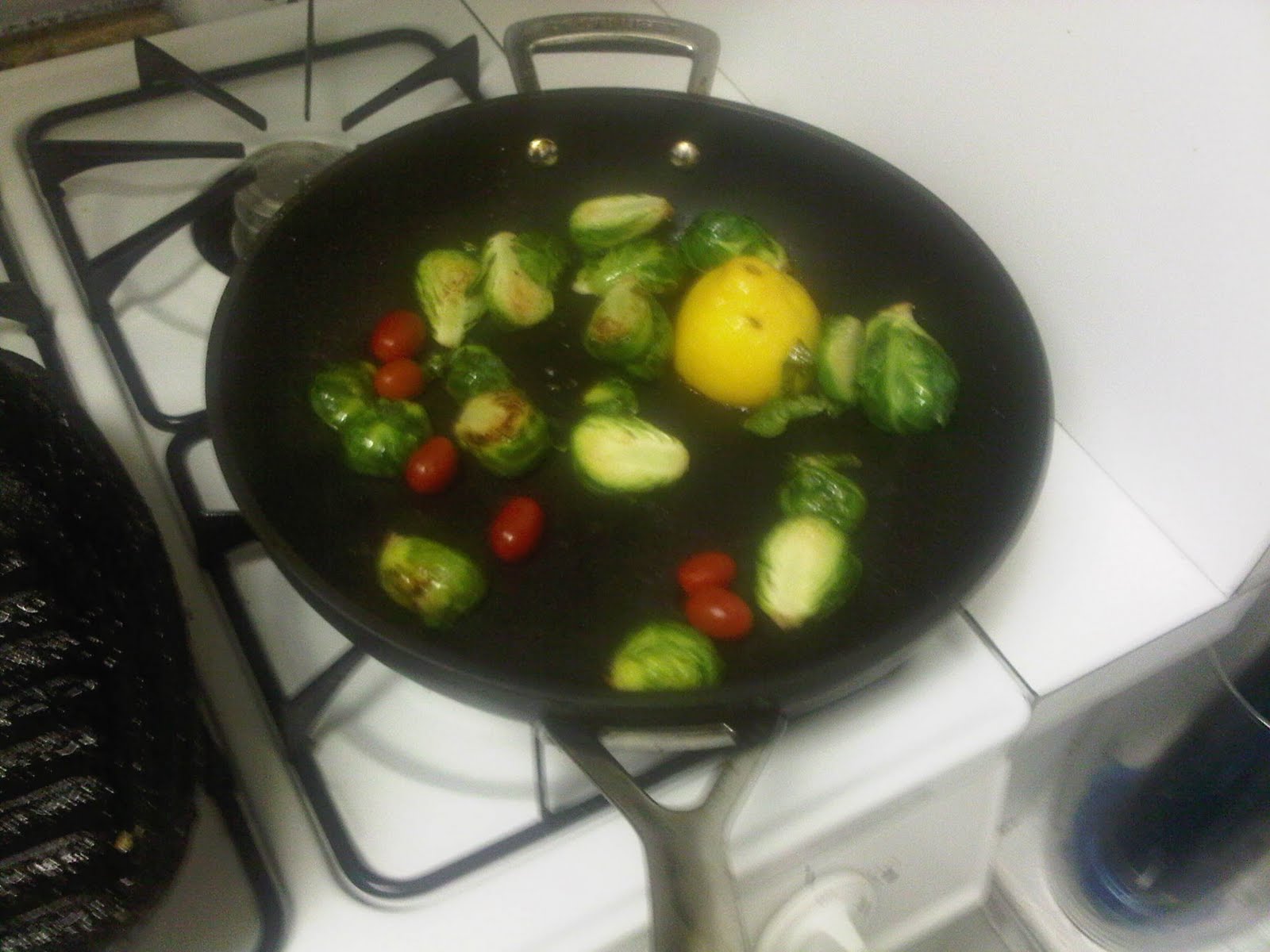
When finished and resting I put the winter squash in the microwave and cook for about 3 minutes.  The squash and brussell sprouts, tomato, garlic and lemon are all fat free.  So, the worst offense here is the skin on the chicken.


Ingredients

1 whole chicken breast
4 - 6 tablespoons barbecue sauce
2 teaspoons coarse sea salt
1/2 package frozen winter squash

(See prior posts for roasted vegetable recipe)

Preparation

Dry the chicken breast with a paper towel.
Cover with the sea salt
Apply a generous layer of the barbecue sauce
Place in a pre-heated 375 degree oven
Roast for 25 minutes
Add the pan with the vegetables for roasting and cook another 20 minutes
Let rest and microwave winter squash for 3 minutes

Monday, August 15, 2011

What's for Dinner?


When I see my friends at the gym most mornings they ask me what I'm making for dinner that night.  I never have any idea.  New York City picks out my dinner for me each night.  Whether I see something at the fruit and vegetable stand to build a meal around or if I see something enticing at the store, I just wait for inspiration to hit.

Take your clams and mussells out of the bag and put them in a bowl when you get them home from the store.  They can die in a sealed bag.  If you have a long commute home ask the fish monger to puncture holes into the bag so they can breathe. You can still keep them in the fridge.  Don't put them in water.

On Sunday I noticed a delicous looking linguine with clam sauce through the window at Josephina's restaurant right around the corner from the Y.  Done and done - I knew what I was having for dinner that night.


When I got to Citarella I noticed mussells near the cockles I planned to buy so this was going to be a variation on linguine with clams.  I figured having both would make things more interesting and visually attractive.  I also decided to use cherry tomatoes and garlic as well.


I never cooked mussells at home before my cooking classes in Amalfi.  I thought you would boil them and it didn't appeal to me.  But I learned that all you have to do is sautee some garlic along with cherry tomatoes.  Next add the mussells and finally the cockles.  I did add some white wine and saffron at the end along with a ladle of water from the pasta water.  This gives a little starchiness to thicken the sauce.


I bought this fancy pasta but plain old linguine works too

At the end toss the pasta right into the pan and mix thoroughly - this makes sure that all the pasta is covered with the delicious sauce

Et Viola!

Ingredients

1/2 pound mussells per person
1/4 pound cockles per person
1/8 cup extra virgin olive oil
1 tablespoon butter
1/4 cup white wine
1/4 cup cherry tomatoes
2 cloves garlic
8 threads of saffron
1 lemon
salt & pepper to taste
1 teaspoon red pepper flakes

Procedure

Place non-stick pan over medium heat.  Pour the olive oil and drop in the butter.  Add the cherry tomatoes (cut in half).  Sautee for a minute or two and add the chopped garlic cloves.  Next add the mussells and cook for a minute before adding cockles.  Cut the lemon in half and add to mixture with the open sides down on the heat. You'll know when the mussells and cockles are done when they start to open.  If any don't open discard them.  Meanwhile, have a pot of pasta going on the stovetop (follow instructions on package).  When the mussells start to open add the white wine and saffron.  Ladle in some of the pasta water - don't get carried away - about 1/4 - 1/3 cup.  When the pasta has cooked drain then put the pasta in the pan with the other ingredients and toss well.  Put mixture in a large bowl and dig in!


Friday, August 12, 2011

The Organic Salmon Controversy


There's so much negative press about farm raised salmon that I decided to try organic salmon instead.  Organic salmon was more expensive than farm raised but not quite as much as wild salmon.   Stores don't label their salmon as farm raised.  At Citarella they call it Scottish Salmon.  It's around $11 a pound.  The organic salmon was $19 a pound.  I noticed the wild salmon was pricing around $26 a pound.  So the price is the give-away.


The organic salmon seemed hardier than the farm raised.  The bad thing about farm raised salmon is that the fish are packed together in pens out at sea.  They are fed grains and are often fed pellets with anti-bacterial agents to prevent infection.  They have the omega 3's - but not as much as wild salmon and they are higher in saturated fat.  They look great at the store because they are dyed to have the vibrant red color.  In fact, they are paler than wild salmon.  I thought organic salmon was the answer but upon doing the research I found that there are no United States Department of Agriculture standards for organic fish.  Most of the organic salmon is shipped from overseas where the standards tend to be lower.  So even though it's labeld organic, there are no guarantees that the fish weren't farm raised.


I noticed a difference in the taste and texture of the organic salmon, so in this case it was a better quality of fish.  But if you want the real deal, you should go for the wild salmon.


I roasted brussell sprouts, lemon and tomato


Hopefully my organic salmon wasn't injected with dyes - the color was beautiful and looked natural.  Along with the roasted brussell sprouts I served lentil salad - a nice combination.  Next time I want to splurge I'm going for the wild salmon.